The 2026 Ford Explorer produces 300 hp and returns 29 MPG on the highway, with BlueCruise hands-free driving standard on ST and Platinum trims. The 2026 Chevrolet Traverse counters with 328 hp and a larger 17.7-inch touchscreen, but trails the Explorer in highway fuel economy. This page breaks down both SUVs spec by spec so you can find the right fit, with Explorer inventory available at Chesrown Ford of Sidney.
The Explorer wins for buyers who prioritize highway fuel economy, hands-free highway driving, and a sport-performance trim, the Explorer ST. The Traverse wins for buyers who need maximum cargo room, an extra seating position, or prefer a front-wheel-drive base configuration. Neither has a towing edge over the other; both cap at 5,000 lbs.
| Specification | 2026 Ford Explorer | 2026 Chevrolet Traverse |
|---|---|---|
| Engine | 2.3L EcoBoost I-4 Turbo | 2.5L Turbo I-4 |
| Horsepower | 300 hp | 328 hp |
| Torque | 310 lb-ft | 326 lb-ft |
| Transmission | 10-speed automatic | 8-speed automatic |
| Drivetrain | RWD standard / Intelligent 4WD available | FWD standard / AWD available |
| City MPG | 20 | 20 |
| Highway MPG | 29 | 26 |
| Combined MPG | 24 | 23 |
| Seating | 7 | 8 |
| Cargo Behind 3rd Row | 16.3 cu ft | 22.9 cu ft |
| Max Cargo | 85.8 cu ft | 97.6 cu ft |
| Length | 198.7 in | 204.5 in |
| Height | 69.6 in | 69.9 in |
| Towing | 5,000 lbs | 5,000 lbs |
| Basic Warranty | 3 yr / 36,000 mi | 3 yr / 36,000 mi |
| Powertrain Warranty | 5 yr / 60,000 mi | 5 yr / 60,000 mi |
The Traverse produces more power on paper: 328 hp and 326 lb-ft of torque versus the Explorer’s 300 hp and 310 lb-ft. In everyday driving, both feel comparable given the weight class, but the Traverse’s output advantage is real.
Where the Explorer recovers ground is at the highway. Its 10-speed automatic helps optimize gear selection for efficiency, and the result is 29 MPG highway versus the Traverse’s 26 MPG. Over 15,000 annual miles at highway speeds, that 3 MPG difference is meaningful. Fuel savings calculator
The Explorer also offers the 3.0L EcoBoost V6, standard on the ST trim and available on Tremor and Platinum, for buyers who want more performance headroom. The Traverse’s powertrain brief lists one engine option only.
Both SUVs tow up to 5,000 lbs. The Explorer adds a Terrain Management System with up to six drive modes, including a Trail/Off-Road mode and a dedicated Tow/Haul mode. The Traverse’s towing spec matches, but no off-road drive mode data was provided for it.
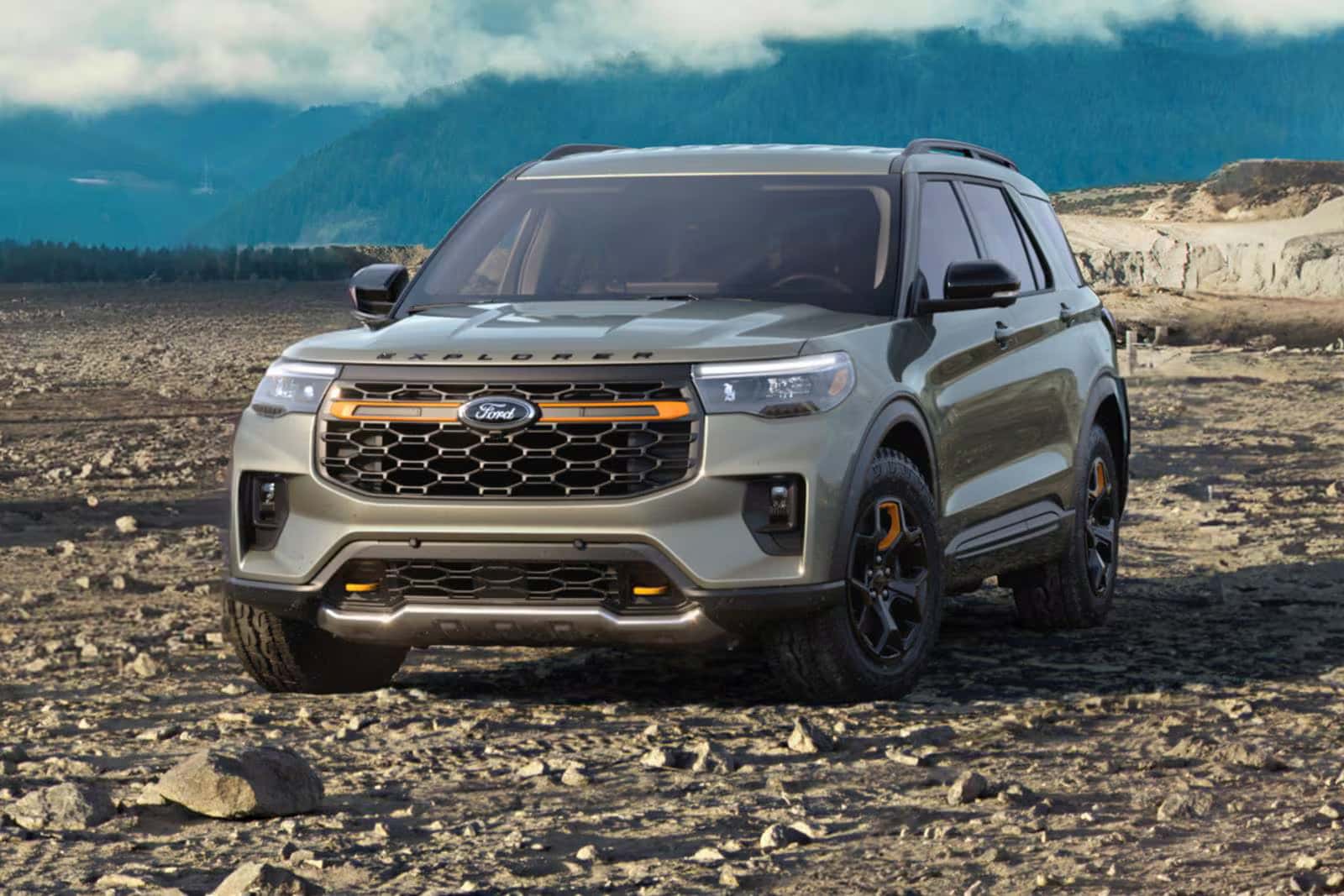
The Tremor trim on the Explorer comes with Intelligent 4WD as standard, giving it the most rugged configuration in the Explorer lineup. The Traverse offers a Z71 AWD trim for buyers who want an all-weather-capable variant.
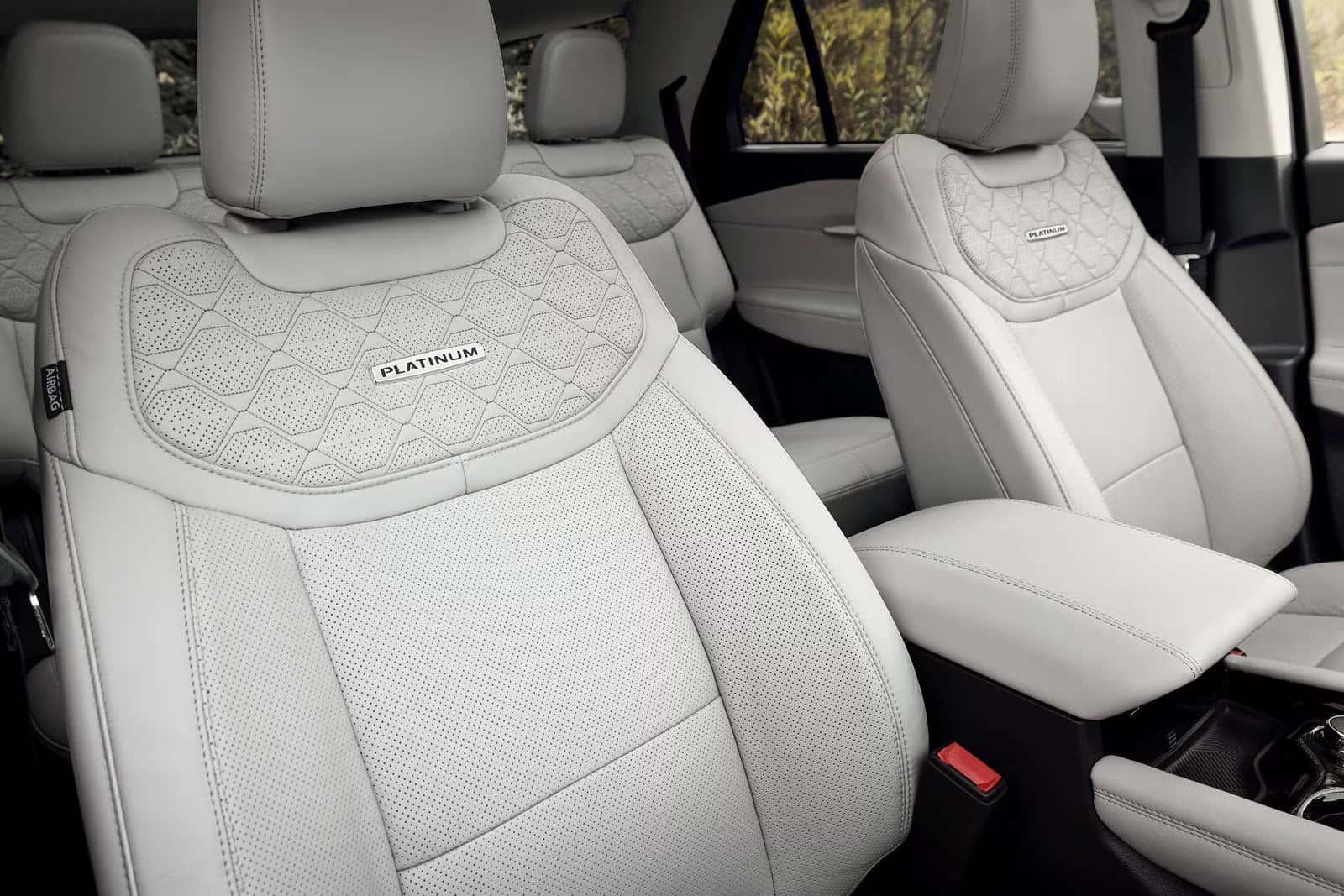
The Traverse is longer at 204.5 inches versus 198.7 inches, and uses that extra footprint for passenger and cargo room. It seats eight versus the Explorer’s seven, and its cargo numbers are notably larger: 22.9 cubic feet behind the third row versus the Explorer’s 16.3 cubic feet, and a maximum of 97.6 cubic feet versus 85.8 cubic feet. Families who regularly load all three rows and still need trunk space will feel the difference.
The Explorer answers with a 13.2-inch SYNC touchscreen, a 12.3-inch digital instrument cluster, and Tri-Zone Automatic Climate Control standard across the lineup. The B&O Bang and Olufsen 10-speaker audio system is standard on ST-Line trims and higher. A 980-watt 14-speaker B&O system is available on upper trims for buyers who treat audio as a priority.
The Traverse pairs a 17.7-inch touchscreen with an 11-inch driver information center. Its AutoSense hands-free power liftgate is standard on all trims, which is a practical convenience edge at the entry level. A panoramic fixed glass roof is available on all Explorer trims except the Active 100A.
The Explorer carries a strong standard safety suite: Forward Collision Warning with Pedestrian Detection, Automatic Emergency Braking, Adaptive Cruise Control with Stop-and-Go, Lane-Centering Steering, Blind Spot Monitors, Rear Cross-Traffic Alert, Emergency Steering Assist, Driver-Attention Monitor, Road-Sign Recognition, Rear Parking Sensors, Automatic High Beams, and AdvanceTrac with Roll Stability Control and Trailer Sway Control.
Ford BlueCruise hands-free highway driving is optional on ST-Line and Tremor trims and comes standard on ST and Platinum. That means buyers in the mid-to-upper range of the Explorer lineup get true hands-free interstate capability without a separate subscription bundle required at purchase.
The Traverse includes Forward Collision Warning that also detects bicyclists, Rear Cross-Traffic Alert with Automatic Braking, Forward Cross-Traffic Alert, Buckle to Drive, Teen Driver mode, and a Safety Alert Seat. Super Cruise, Chevrolet’s hands-free highway system, is standard on High Country and RS trims via the Enhanced Driving Package per the provided specs.
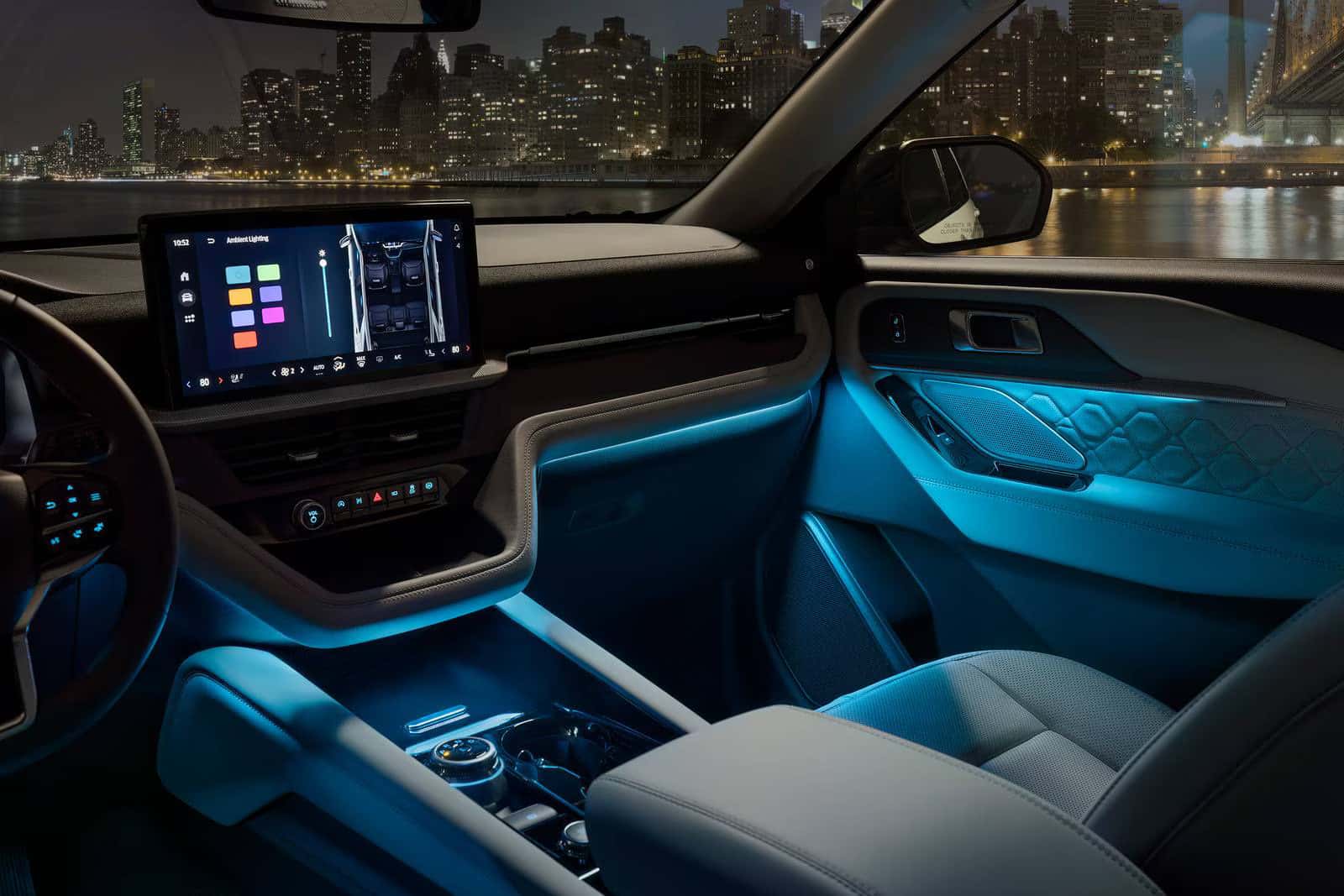
The Traverse’s 17.7-inch touchscreen is physically larger than the Explorer’s 13.2-inch display. The Traverse also runs Google built-in natively, including Google Maps, Google Play, and Google Gemini. The Explorer uses the SYNC platform with wireless Apple CarPlay and Android Auto. Both have strong connectivity, but the underlying software philosophy differs: Google-native versus a wireless projection model.
Both SUVs carry the same basic warranty: 3 years or 36,000 miles. The Traverse adds a 5-year/60,000-mile powertrain warranty, which is an ownership advantage the Explorer does not match based on the specs provided.
The Explorer’s six-trim lineup, Active 100A through ST, gives buyers more configuration granularity than the Traverse’s four-trim structure. Buyers who want RWD have that option on the Explorer. The Traverse’s base is FWD, which is appropriate for most Ohio drivers but leaves fewer off-pavement options.
The Explorer’s 29 MPG highway versus the Traverse’s 26 MPG represents a long-term operating cost advantage for commuters and road-trip families. If you put 20,000 highway miles on your SUV annually, the Explorer’s efficiency lead compounds meaningfully over a typical ownership cycle.
The Traverse’s larger cabin and cargo bay may reduce the need to upgrade to a full-size SUV, which has its own ownership cost implications. For buyers right on the line between three-row mid-size and full-size, the Traverse’s numbers push further into that space.
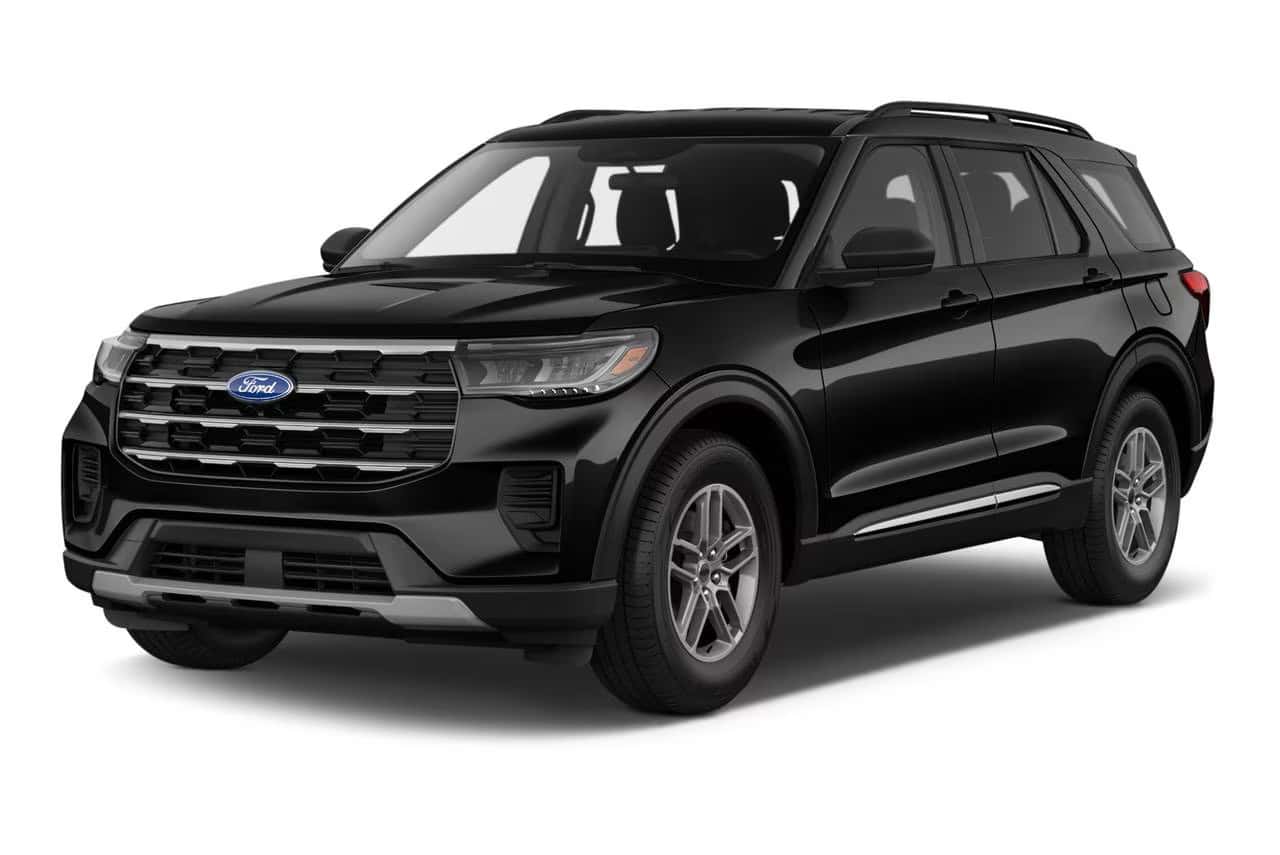
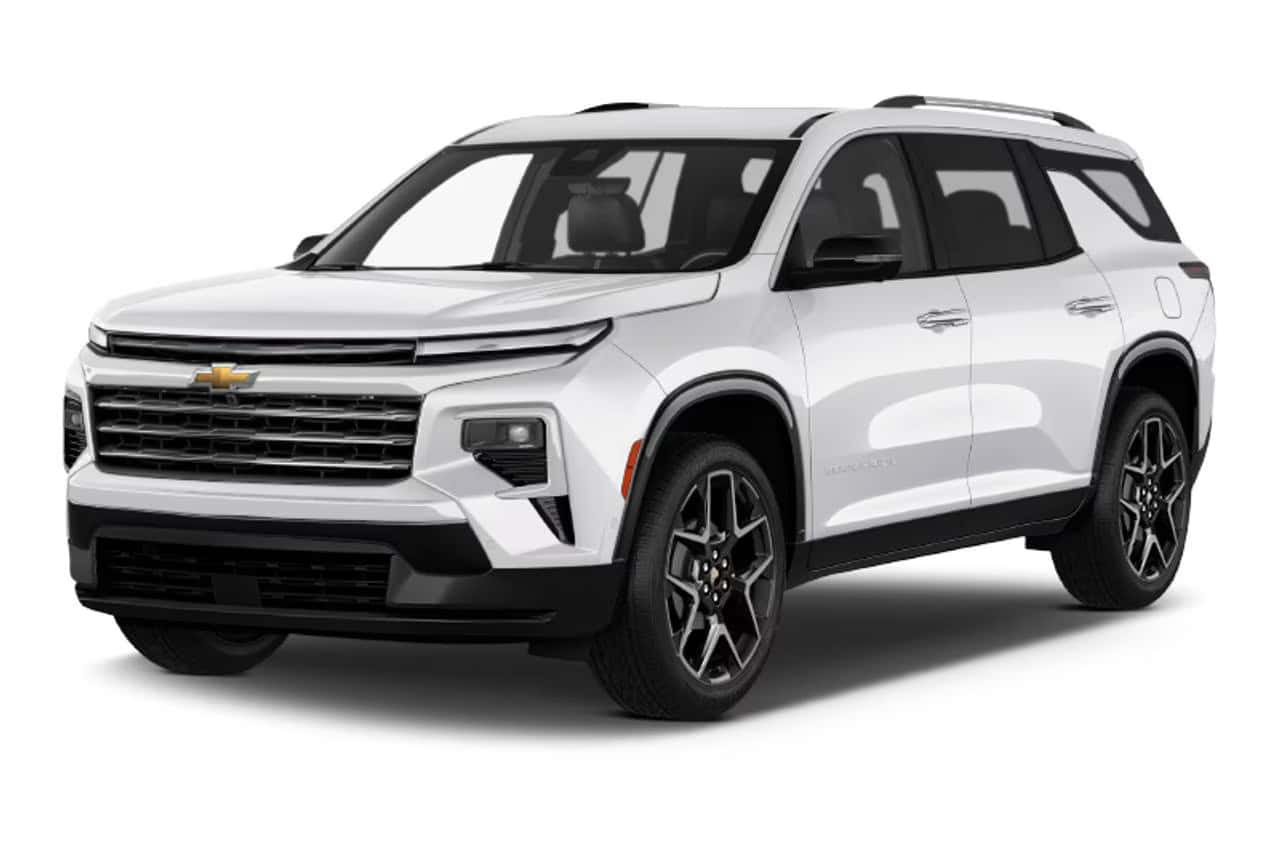
For most buyers shopping in Sidney and the surrounding Ohio area, the Explorer is the stronger all-around choice: better highway efficiency, a deeper trim ladder, and BlueCruise availability across a wider range of configurations. The Traverse earns the win on raw space and powertrain warranty, full stop.
Chesrown Ford of Sidney carries new 2026 Explorer inventory across multiple trims, from the entry Active to the performance-tuned ST. If you are comparing these two SUVs and want to sit in an Explorer before deciding, the team in Sidney can walk you through every trim level and available option. Buyers from across western Ohio make the drive to Chesrown Ford for the selection and the straightforward process.
Yes. The Explorer returns 29 MPG highway versus the Traverse’s 26 MPG highway, and 24 combined versus 23 combined. City fuel economy is identical at 20 MPG for both.
The Traverse. It offers 22.9 cubic feet behind the third row and 97.6 cubic feet maximum, compared to the Explorer’s 16.3 cubic feet behind the third row and 85.8 cubic feet maximum.
Yes. Ford BlueCruise is optional on ST-Line and Tremor trims and comes standard on the Explorer ST and Platinum. It provides hands-free highway driving on pre-mapped roads.
Yes. Super Cruise is available on Traverse High Country and RS trims through the Enhanced Driving Package per the specs provided.
Both tow up to 5,000 lbs. Towing capacity is equal between these two SUVs.
The Traverse seats eight. The Explorer seats seven. If a full third-row bench is a requirement, the Traverse provides the extra position.
No. Both carry a 3-year/36,000-mile basic warranty. The Traverse adds a 5-year/60,000-mile powertrain warranty that the Explorer does not match based on available specs.
Chesrown Ford of Sidney stocks new Explorer inventory. You can browse available units online or visit the dealership to compare trims directly.